How fast can a crew respond to water damage in Houston?
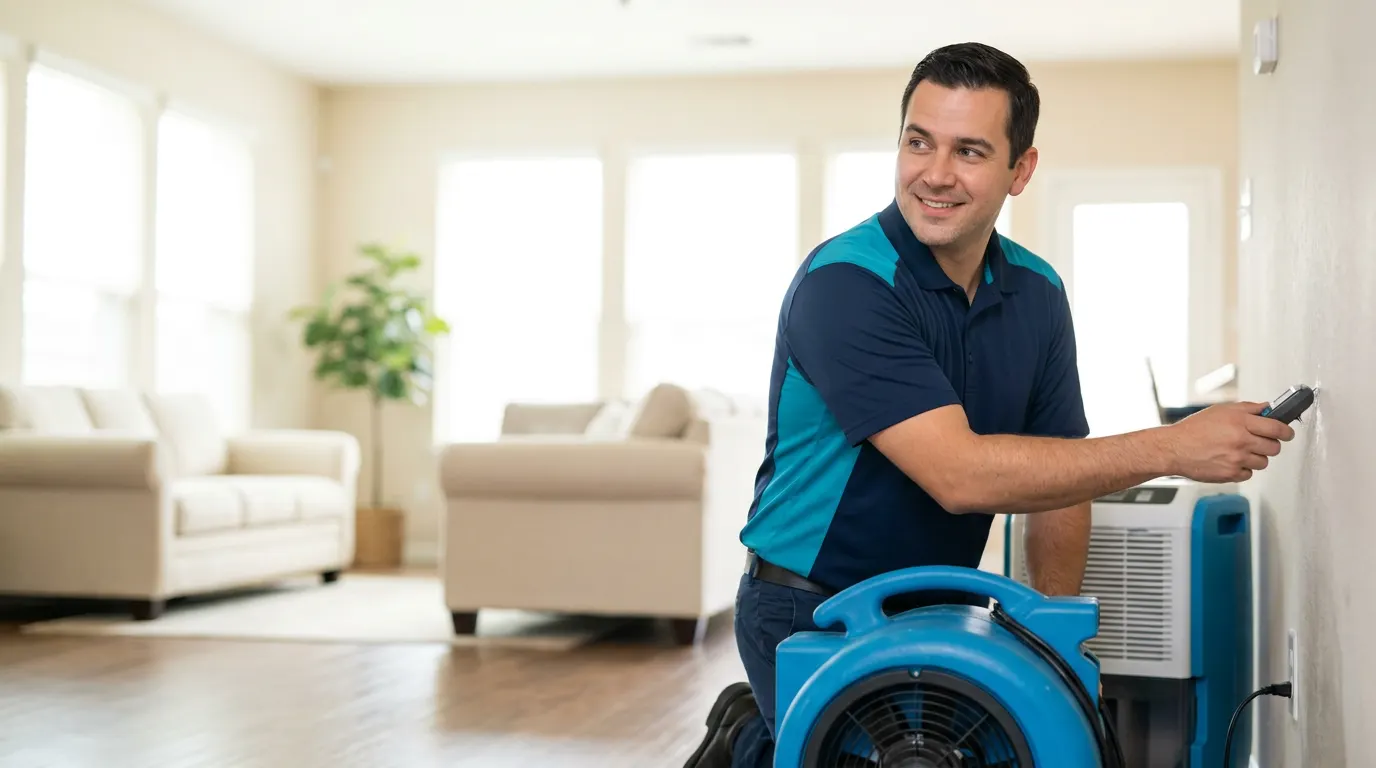
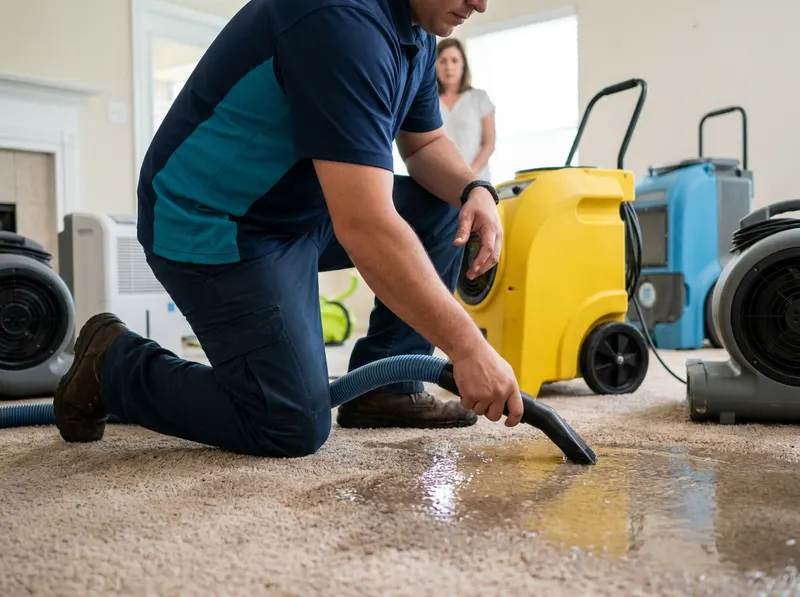
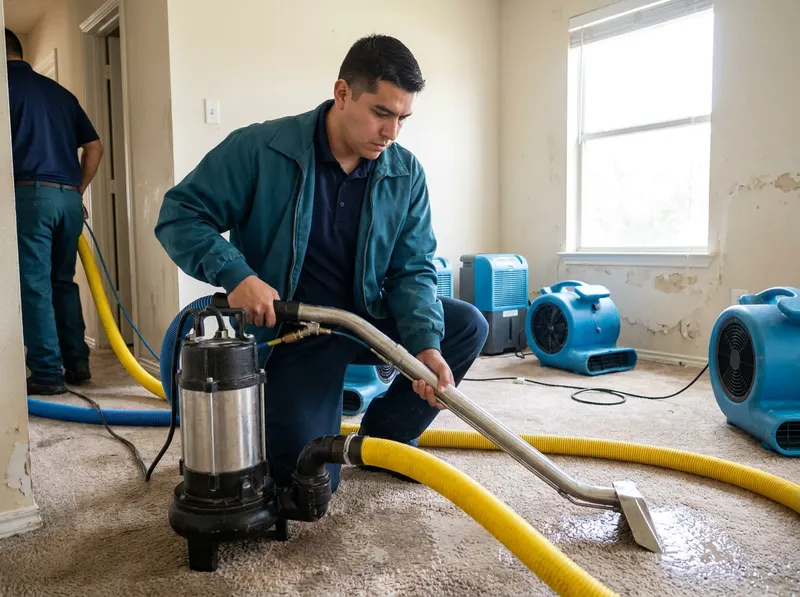
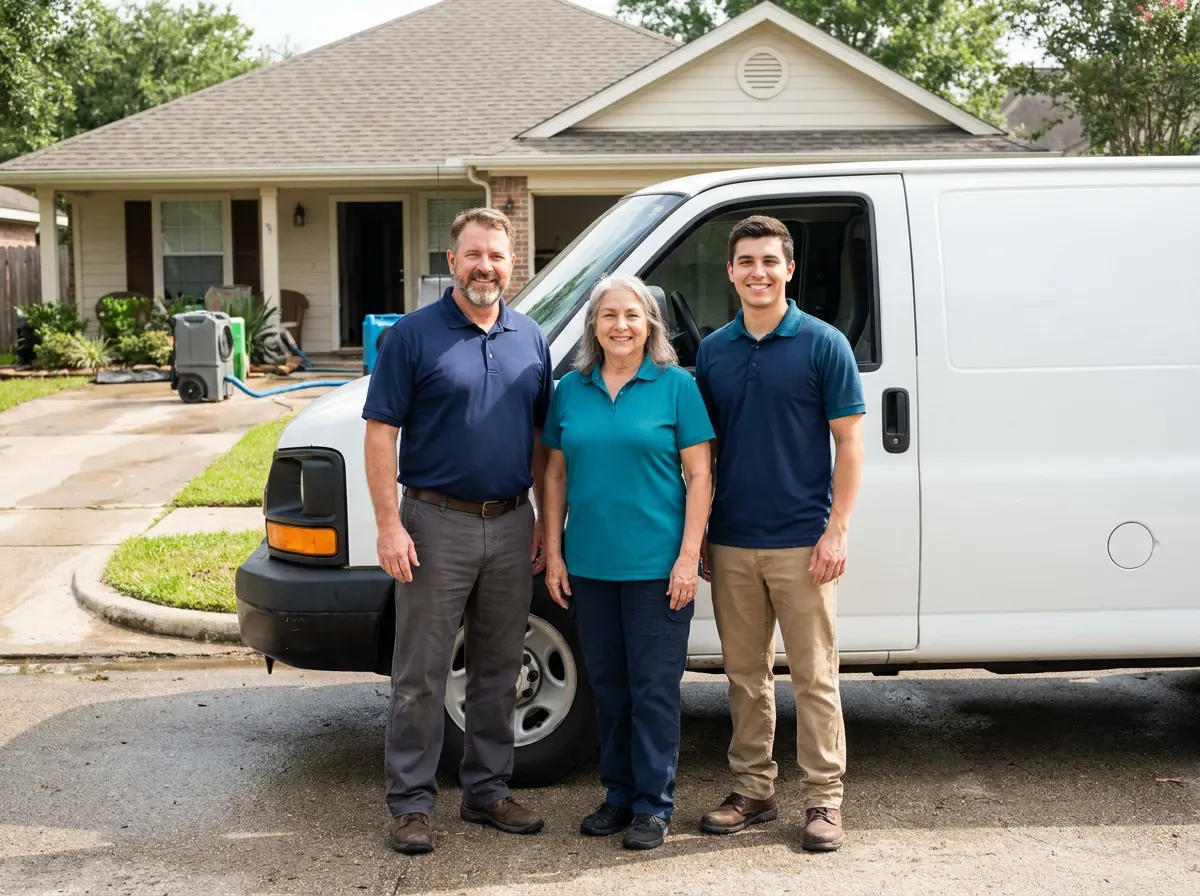
Response is available 24/7 across Houston and surrounding Harris and Fort Bend counties, with crews aiming to arrive same-day for active water losses. Extraction within the first 24 hours is what usually determines whether flooring and drywall can be dried in place instead of replaced.
Does homeowners insurance cover water damage restoration in Houston?
Sudden losses, a burst pipe, water-heater failure, or storm-driven roof leak, are generally covered by Houston homeowners policies, while rising floodwater from a bayou is typically covered only under a separate NFIP flood policy. Crews document moisture readings, photos, and a line-item scope so the claim reflects the actual damage.
How much does water damage restoration cost in Houston?
A single affected room in Houston generally runs $1,300, $5,500, and whole-home flood recovery runs $8,000, $30,000 or more depending on water category and how long it sat. These are ballpark ranges; the exact figure is confirmed with a free on-site evaluation and written estimate before work begins.
How long does it take to dry out a flooded Houston home?
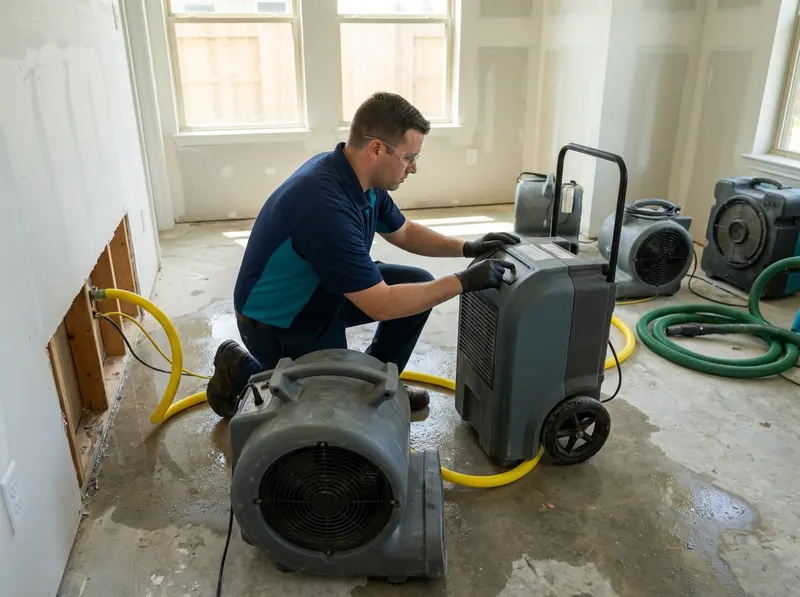
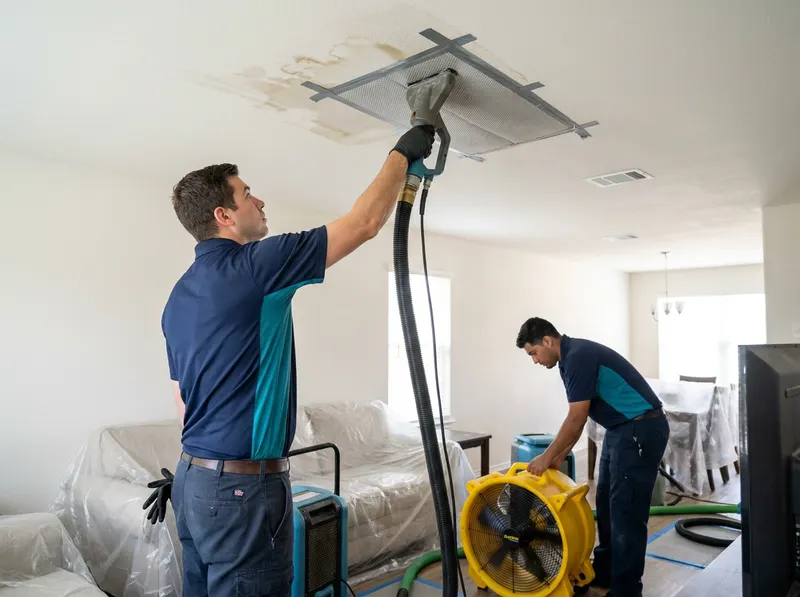
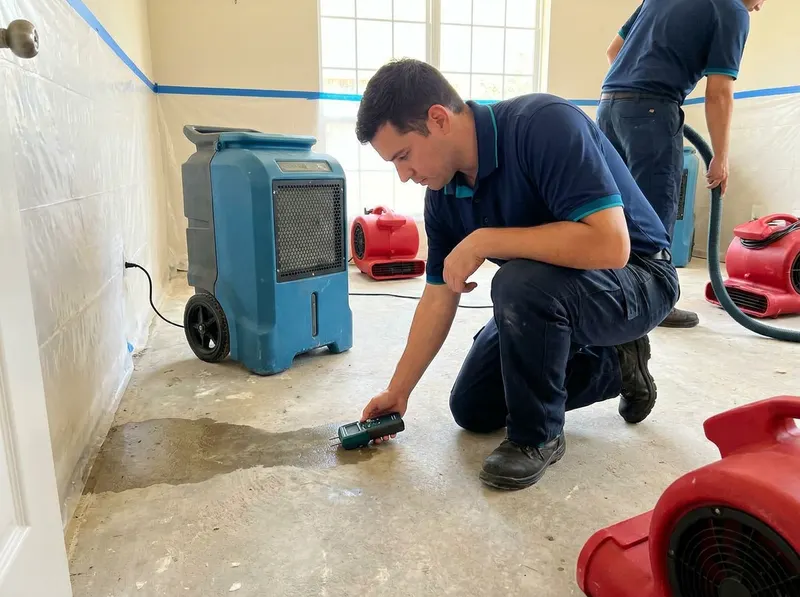
Structural drying in Houston typically takes 3, 5 days with commercial air movers and dehumidifiers running continuously, monitored daily with a moisture meter. Homes hit by bayou flooding may take longer because soaked drywall, insulation, and carpet pad have to be removed before drying can finish.
What areas around Houston are served for water damage restoration?
Service covers The Heights, Montrose, Meyerland, Bellaire, West University, Memorial, Spring Branch, River Oaks, and Midtown inside the Loop, plus Katy, Sugar Land, Cypress, Pearland, Clear Lake, and Kingwood in the surrounding suburbs. To reach a crew, call or text a photo of the damage for a quick scope.
What is the difference between Category 1, 2, and 3 water damage in Houston?
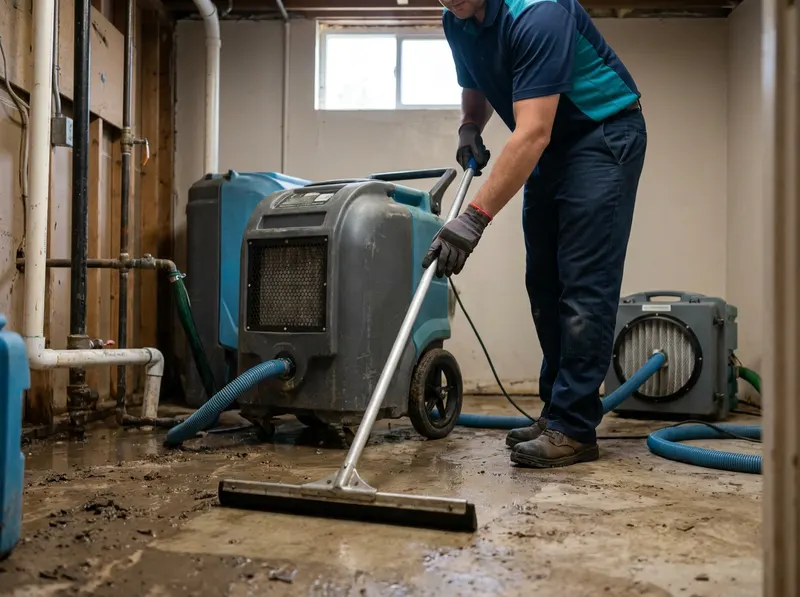
Category 1 is clean water from a supply line or water heater and can often be dried in place; Category 2 is gray water that has passed through the structure or sat long enough to pick up contaminants and usually means removing carpet pad and lower drywall; Category 3 is black water such as sewage or bayou floodwater, which requires full removal of porous materials and antimicrobial treatment. In Houston, clean water left untreated can degrade to a higher category within a day or two because of the heat and humidity, so the category is judged by both the source and how long it sat.
Can water-damaged hardwood floors be saved in Houston homes?
Solid hardwood can often be dried and saved if extraction begins within roughly 24 hours and specialized floor-drying mats are used to pull moisture from below the boards. Engineered and laminate flooring rarely survives because the layers separate once wet, and boards that have already cupped or crowned usually need replacement. A moisture meter reading on the boards and the subfloor beneath them determines whether drying or replacement is the better call.
Do I have to remove all the drywall after a flood in Houston?
Not always; drywall touched only by clean water and dried within a day can often stay, while drywall soaked by floodwater or sewage is cut out one to two feet above the visible water line because gypsum wicks moisture upward and holds contaminants. The decision depends on the water category, how high it rose, and moisture-meter readings, not on how the surface looks, since drywall can read wet inside while appearing dry outside.
What should I do in the first hour after finding water damage in a Houston home?
First, stop the source if it is safe, shutting off the water at the fixture or main, and turn off electricity to the affected area if outlets or panels are near the water. Move valuables and furniture out of the wet zone, take photos for the insurance claim, and avoid walking on soaked flooring more than necessary. Then contact a restoration crew so extraction can begin, because the first 24 hours largely decide how much can be dried instead of replaced.
Does water damage restoration in Houston include mold removal?
Fast drying is the first defense against mold, and when water is extracted and the structure is dried below 16% moisture within a couple of days, mold usually never establishes. If water sat long enough to seed growth, remediation adds containment, HEPA air scrubbing, and antimicrobial treatment, which is a separate scope from drying. In Houston's humidity, mold can appear on wet gypsum within 48 hours, so the two are often planned together on losses that were not caught quickly.
How does the water damage restoration process work step by step in Houston?
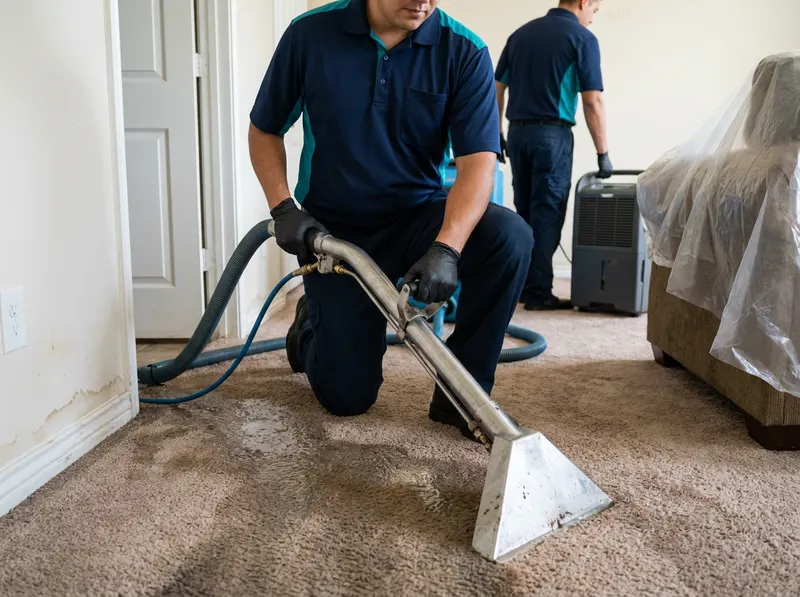
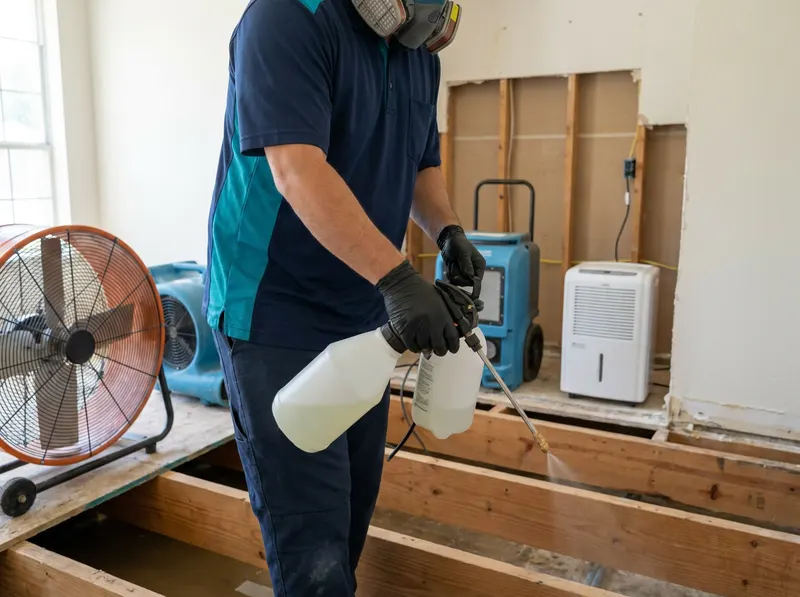
The process moves in order: first an on-site inspection with a moisture meter maps the water; second, standing water is extracted with truck-mounted or portable equipment; third, wet materials that cannot be saved, such as soaked carpet pad, insulation, or contaminated drywall, are removed; fourth, air movers and dehumidifiers run for 3, 5 days with daily moisture readings; fifth, once framing reads below 16%, drywall and flooring are patched and the space is rebuilt. Throughout, dated photos and drying logs are kept so the insurance claim matches the actual work.
Is a free estimate really free for water damage restoration in Houston?
The on-site evaluation and written estimate are provided at no cost, and pricing is given as a range up front rather than a single locked number, because the true scope of a water loss often extends behind walls and under flooring that a moisture meter reveals during the visit. The written estimate confirms the figure before any equipment is set, so there is no charge simply for having the damage assessed.