Storm & Flood Recovery Houston
Houston sits on flat coastal prairie drained by 22 bayous, and neighborhoods along Buffalo Bayou, Brays Bayou and White Oak Bayou flood repeatedly during heavy rain. Areas like Meyerland, Bellaire, the Energy Corridor…
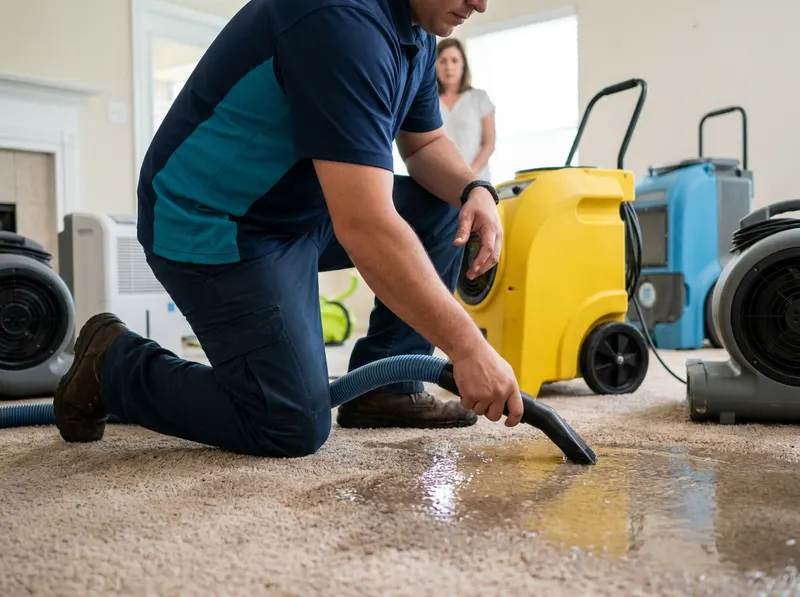
Houston sits on flat coastal prairie drained by 22 bayous, and neighborhoods along Buffalo Bayou, Brays Bayou and White Oak Bayou flood repeatedly during heavy rain. Areas like Meyerland, Bellaire, the Energy Corridor…
Houston sits on flat coastal prairie drained by 22 bayous, and neighborhoods along Buffalo Bayou, Brays Bayou and White Oak Bayou flood repeatedly during heavy rain. Areas like Meyerland, Bellaire, the Energy Corridor near I-10 and low-lying parts of Kingwood took feet of water during Hurricane Harvey in August 2017, and many streets inside the West Houston reservoir pool below Barker and Addicks flooded again in later storms. Storm and flood recovery is built for this specific problem: water that entered from outside carrying mud, sewage and debris, which the EPA and IICRC both classify as Category 3 contaminated water.
Flood recovery differs from a burst-pipe cleanup in one decisive way. A clean-water leak can often be dried in place and saved, but floodwater is treated as contaminated, so porous materials that touched it are removed rather than dried. That means cutting drywall to the flood line plus 12-18 inches above it, pulling wet insulation, and removing carpet, pad and often engineered wood and vinyl plank. Solid materials like concrete slab, tile and framing lumber are cleaned, disinfected and dried in place. This demolition-and-disinfect approach is why flood recovery costs more per square foot than a standard water extraction.
The sequence runs in a fixed order. First, standing water is pumped and extracted. Second, mud, silt and unsalvageable materials are muck-out and hauled. Third, all remaining surfaces are cleaned and treated with an antimicrobial to stop mold, which can start growing in Houston's 70-90% summer humidity within 48-72 hours of the water receding. Fourth, air movers and LGR dehumidifiers dry the framing and slab until moisture readings return to a documented dry standard, usually across 4-7 days. Documentation matters here: photos, moisture logs and a materials inventory are what flood insurers and FEMA claims require for reimbursement.
Which path fits depends on how the water entered. If a supply line, water heater or overhead pipe caused clean-water damage, standard water extraction and in-place drying is the fit and costs less. If floodwater came up through the slab, over the threshold or through a storm-damaged roof or window, storm and flood recovery is the correct service because the contamination requires removal and disinfection. Homes inside the Barker and Addicks flood pools, along Sims Bayou in the southeast, and in older Meyerland and Braeswood blocks below street grade are the most common Houston candidates for full Category 3 recovery. Call the number on this page, or text a photo of the water line and standing water, for a same-day ballpark before a free on-site inspection confirms scope and price.
Every job gets a firm, written price after a free on-site visit.
Tell us about your storm & flood recovery job in Houston and we'll send a clear, written quote, usually the same day.