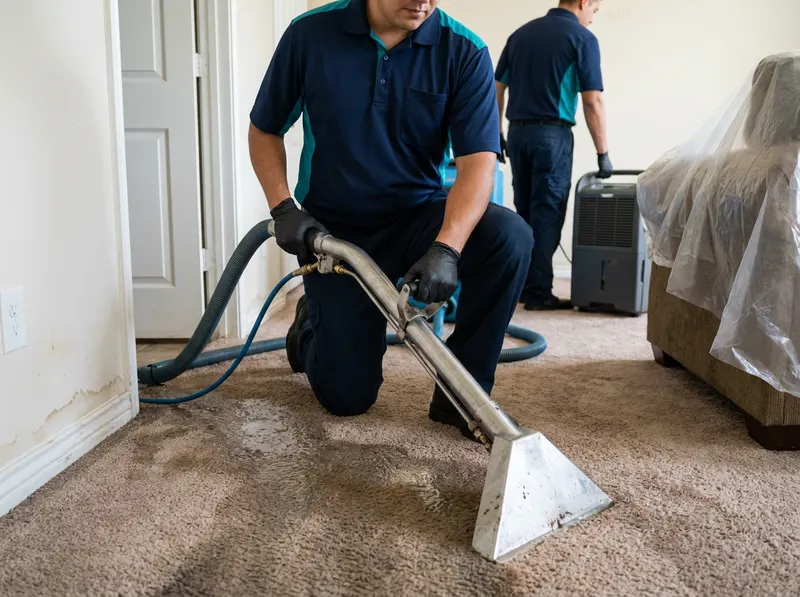
Emergency water extraction is the removal step, not the full restoration. Extraction pulls the water out; structural drying with air movers and dehumidifiers happens afterward, and reconstruction is a separate later phase. Confusing the three inflates expectations, a flooded Meyerland living room can be extracted in an afternoon, but the drywall and framing behind it may still read wet for 3-5 days on a moisture meter.
Houston conditions shape the job. Bayou-adjacent neighborhoods like Meyerland, Braeswood, and the Memorial area near Buffalo Bayou take repeat flooding, and Harris County clay soil holds groundwater against slab foundations long after a storm passes, so extraction crews check for hydrostatic seepage through slab cracks, not just visible pooling. Homes east of I-45 and in Kingwood after the San Jacinto River rises often have water that sat for hours, which pushes the response from clean-water (Category 1) toward contaminated (Category 3) handling and changes what can be saved.
Equipment choice follows the volume. A portable extractor handles a single wet bedroom or a hot-water-heater leak in a Heights bungalow. A truck-mounted unit, which pulls far more gallons per minute, is used for a whole first floor or a two-story stairwell where water traveled between levels. Submersible pumps clear several inches of standing water from a garage or ground-level room before wands finish the surface. If the water is over roughly 2 inches deep across a large area, truck-mount is the practical choice; below that, portable units reach tight rooms a hose cannot.
The sequence is straightforward. First, the crew shuts off the water source and confirms electrical safety. Second, standing water is pumped or vacuumed out. Third, carpet is lifted and the pad, which acts like a sponge, is extracted or removed, since a soaked pad is rarely worth drying. Fourth, moisture readings are logged room by room to set drying targets. Grounding note: extraction alone does not equal a dry structure, which is why moisture documentation matters for an insurance claim under standard IICRC S500 water-damage guidelines.