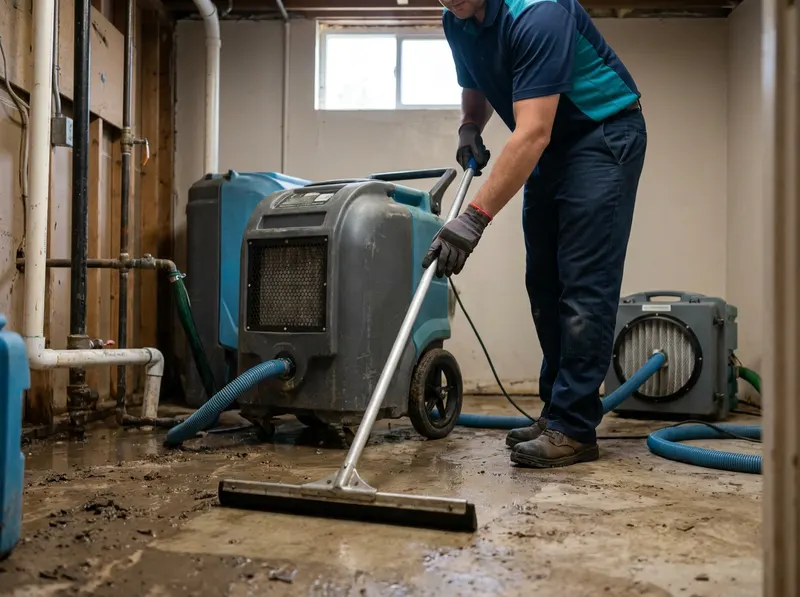
Category 3 water is defined by the IICRC S500 standard as water carrying pathogenic, toxic, or otherwise harmful agents, sewage backups, rising floodwater, and any standing water left long enough to become grossly contaminated. This is the reason a sewage cleanup differs from a clean-water dry-out: Category 1 water from a supply line can often be dried in place, but Category 3 water forces removal of the porous materials it soaked. Drywall is cut and discarded to roughly 12, 24 inches above the visible waterline, carpet and pad are pulled and bagged, and non-salvageable trim and cabinetry are hauled out as contaminated waste. Framing, concrete slab, and sealed tile are cleaned, disinfected, and dried rather than removed.
Houston's flat coastal-prairie grade and clay soil make sewer backups common during heavy Gulf storms, when city mains surcharge and push water back through the lowest fixture in a home, often a first-floor toilet or a slab-foundation floor drain. Bungalows in the Heights and older homes near Braes Bayou and Brays Bayou sit on cast-iron drain lines 50, 70 years old that root-intrude and collapse, producing recurring backups unrelated to weather. Two-story homes in Katy, Cypress, and Clear Lake more often see upstairs supply or drain failures that send Category 3 water through the ceiling into a lower level, expanding the affected footprint.
The sequence runs in a fixed order: (1) extract standing sewage with truck-mount or portable pumps; (2) set containment barriers and negative air pressure so contaminants do not migrate to clean rooms; (3) remove and bag saturated porous materials; (4) apply an EPA-registered antimicrobial to remaining surfaces; (5) run HEPA air scrubbers and dehumidifiers until framing and slab reach a documented dry standard, typically 3, 5 days. Moisture readings are logged daily so the drying endpoint is measurable rather than assumed.
A sewage cleanup fits any situation where the water source is a sewer, toilet trap, or contaminated flood, do not attempt to dry contaminated carpet or drywall in place, because pathogens remain even after the surface feels dry. If the water is clean supply-line water caught within 24, 48 hours, standard water extraction and in-place drying is the lower-cost path. If the water is sewage or has stood long enough to grow biofilm, Category 3 removal is the correct scope. To reach a crew, call [phone] or text photos of the standing water and affected rooms for a preliminary range.